Barber Shop in Pace, FL: What Actually Belongs on Your Shelf?
A barber shop in Pace, FL can help you answer a surprisingly useful question: which products will make your new cut easy to style tomorrow…

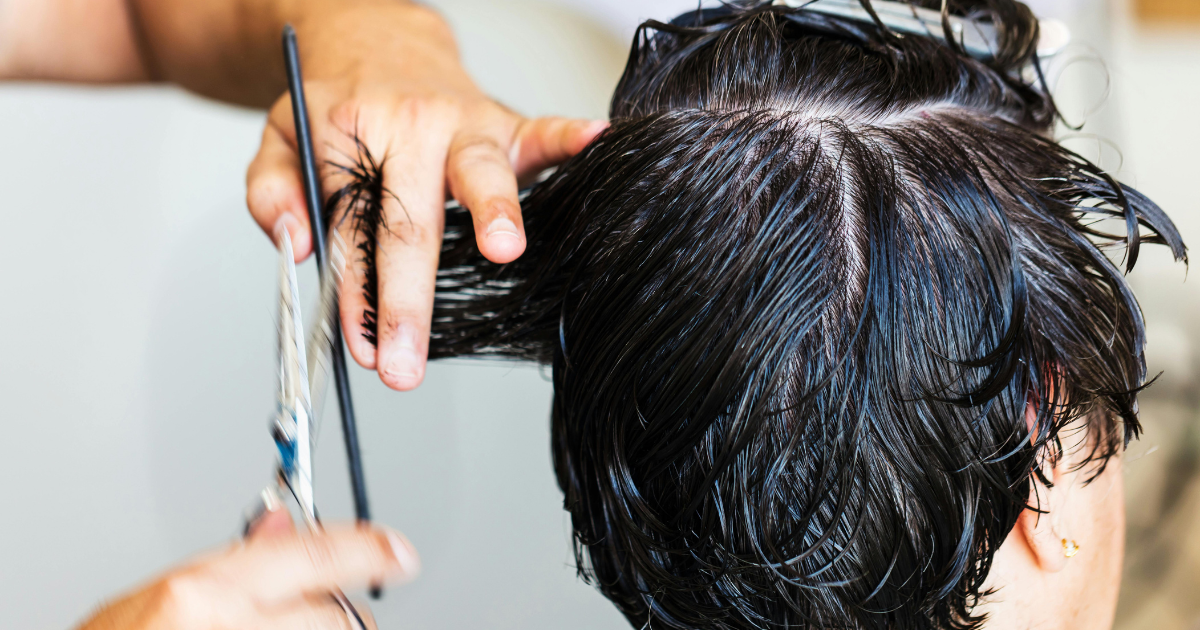
A great hair salon in Hamilton Square, NJ should offer more than a beautiful finish for one afternoon. The real test is whether the experience feels personal, the service matches your lifestyle, and you understand how to care for your hair once you leave the chair.
As someone who follows beauty trends, I love a dramatic transformation. Give me dimensional color, glossy movement, or a perfectly styled blowout and I am paying attention. But the longer I spend around beauty content, the more I appreciate the less glamorous details: a thoughtful consultation, honest recommendations, realistic maintenance expectations, and a stylist who understands that great hair must work beyond the final photo.
That is the difference between booking an appointment and building a salon routine you can actually enjoy.
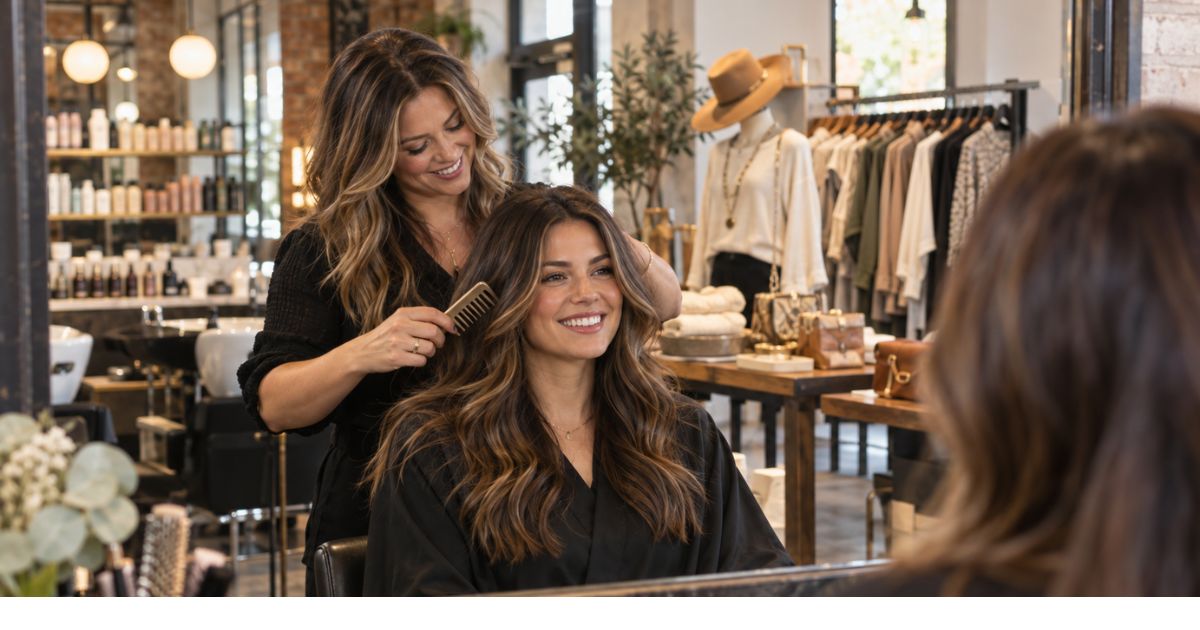
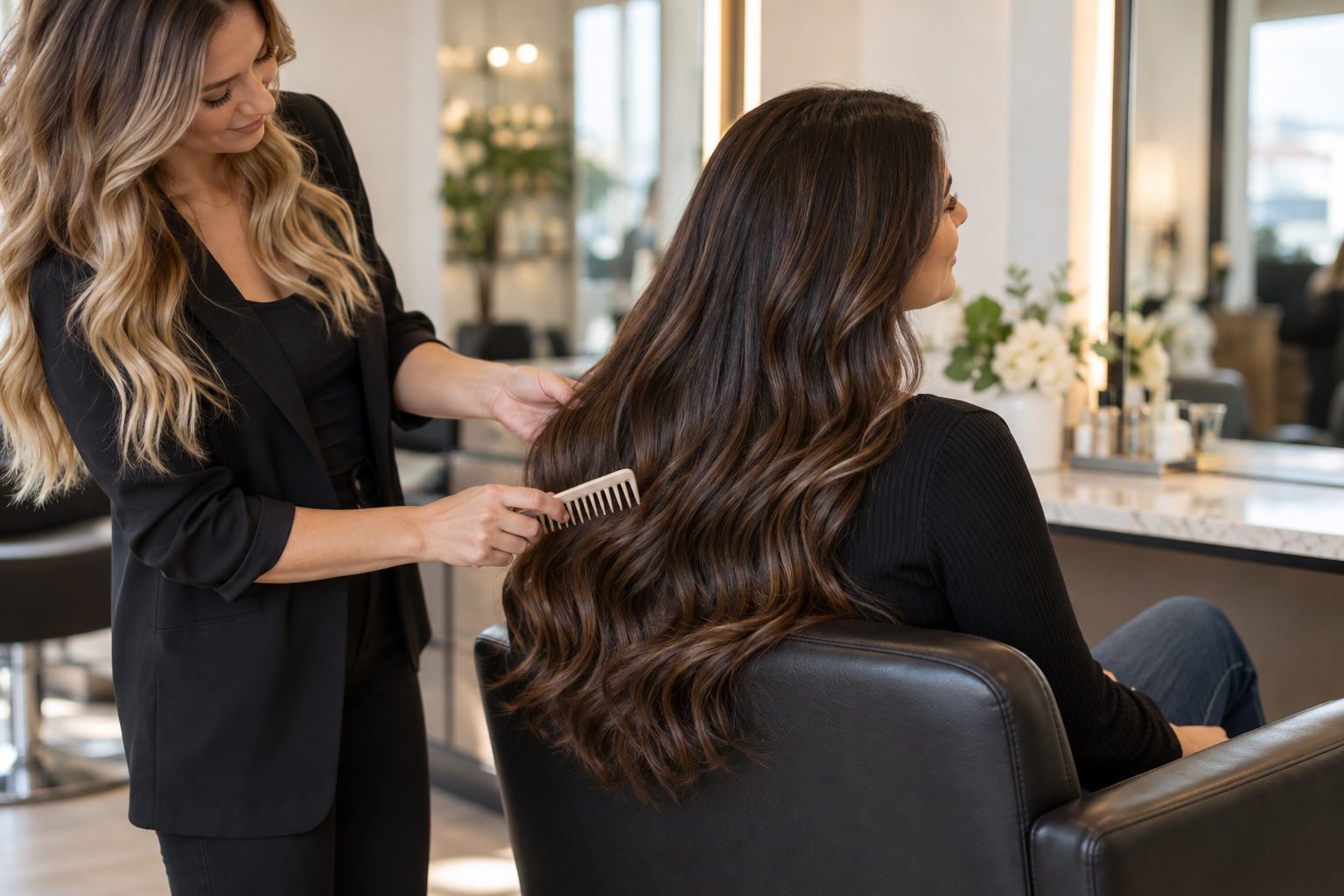
A consultation should never feel like a formality. It is where inspiration meets reality and where the stylist learns how the guest’s hair behaves outside the salon.
A useful conversation may cover texture, density, previous chemical services, styling habits, current concerns, and long-term goals. It should also address how much time the guest is comfortable spending on daily styling and how frequently they want to return for maintenance.
Photos are helpful, but they do not tell the complete story. A polished image may involve extensions, professional lighting, strategic posing, or more styling time than someone wants to spend at home. Rather than copying a photograph exactly, an experienced stylist can identify the elements that make it appealing and adapt them to the guest.
Maybe the real attraction is not the exact haircut but the movement around the face. Perhaps it is not the precise shade but the softness and dimension of the color. Clarifying those details allows the final look to feel inspired without becoming impractical.
Not every stylist approaches hair in the same way, and that is a good thing. Some specialize in lived-in blonding, creative color, curls, short cuts, extensions, or polished styling. Matching a guest with someone whose strengths align with the desired service can make the experience more comfortable and productive.
Personality matters too. Some guests want a highly collaborative appointment with plenty of conversation. Others prefer quiet time and straightforward guidance. A successful match considers both technical specialty and communication style.
The beauty industry often celebrates the final reveal, but trust develops earlier. It grows when a stylist asks specific questions, explains limitations clearly, and offers alternatives instead of agreeing to a service that may not suit the hair’s current condition.
For another useful way to evaluate those details, Ivanna Richman’s honest salon scorecard explores the qualities that can separate a memorable salon experience from an ordinary appointment.
A haircut looks its most polished after professional styling, but its real personality appears after the first wash. That is why the best haircut discussions include natural texture, air-drying habits, preferred parting, work requirements, exercise routines, and whether the hair needs to fit into a ponytail.
Straight, wavy, curly, and coily hair respond differently to the same cutting pattern. Layers that create airy movement in one texture may remove too much weight from another. A fringe that looks effortless in a photo may require daily attention when cowlicks or humidity enter the picture.
Curly hair deserves especially individualized planning. The American Academy of Dermatology notes that curly and coily hair can be more prone to dryness and breakage. The organization recommends moisture-conscious care, gentle detangling, and routines selected for the individual texture.
A practical haircut respects these natural characteristics instead of expecting the guest to fight them every morning.
Hair color is one of my favorite examples of beauty and science working together. Balayage, highlights, root color, dimensional brunettes, vivid shades, and gloss treatments all create different visual effects. The right choice depends on the starting shade, hair condition, maintenance expectations, and desired level of contrast.
Going lighter usually requires a different plan from deepening or refreshing an existing tone. Major changes may need to happen over multiple appointments, especially when maintaining the hair’s condition is a priority. Previous color also matters because artificial pigment does not always lift or shift predictably.
The American Academy of Dermatology’s color-care guidance explains that chemical services can leave hair dry or brittle and that more substantial lightening can require stronger processing. That does not mean guests must avoid color. It means the service and aftercare should be planned thoughtfully.
Safety belongs in the conversation as well. The U.S. Food and Drug Administration recommends following product directions, observing warning statements, and conducting appropriate testing before using hair dye. Guests should tell their stylist about previous reactions, scalp sensitivity, or unexpected problems with past color services.
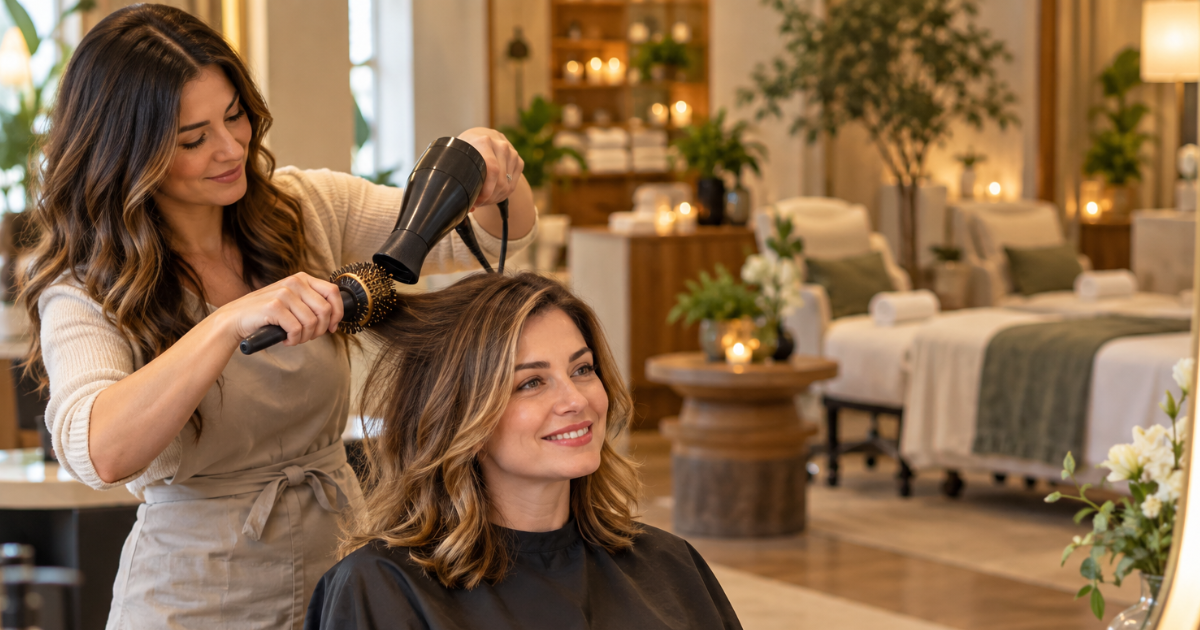
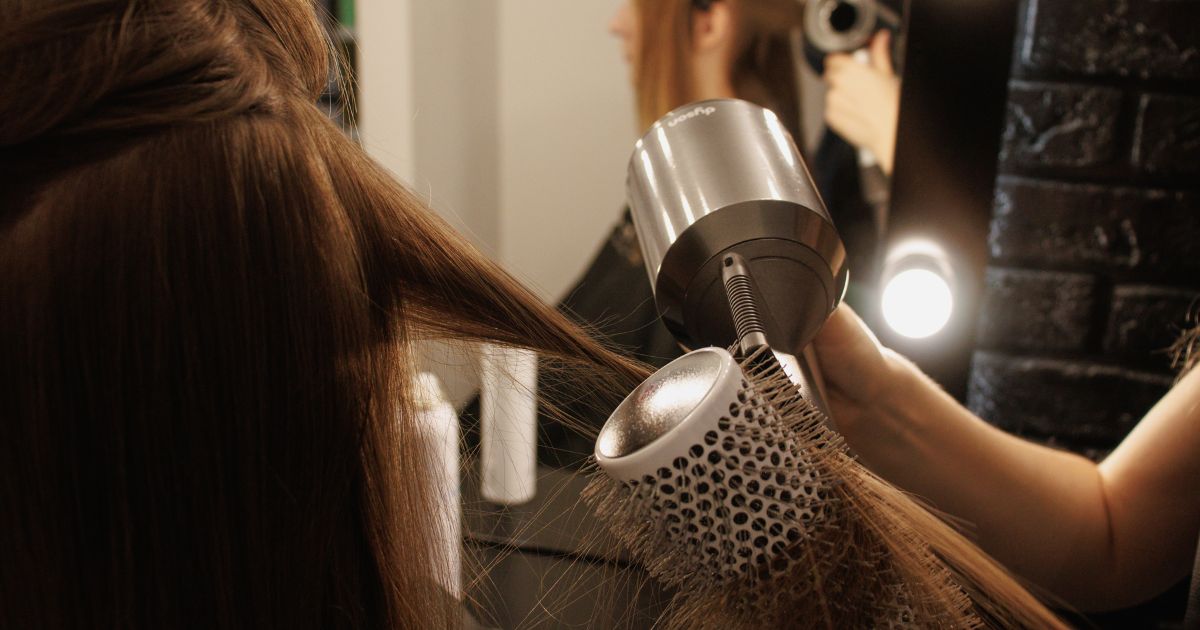
A professional blowout can transform how a haircut or color is seen. It may create smoothness, volume, defined curls, soft waves, or a polished foundation for an event. Just as importantly, the styling stage offers a chance to learn.
Guests can watch how the stylist sections the hair, directs airflow, positions the brush, and selects finishing products. Asking which steps make the biggest difference can turn a salon finish into a routine that feels more achievable at home.
Heat should still be used with care. Research available through the National Library of Medicine found that higher-temperature drying can contribute to damage on the hair’s outer surface. The American Academy of Dermatology similarly recommends limiting excessive heat, using low or medium settings when possible, and applying a heat-protective product.
The goal is not to fear styling tools. It is to use them intentionally and avoid applying more heat than the desired result requires.
Extensions can add length, fullness, color, or styling flexibility, but there is no single method that works for every guest. The natural hair’s density, strength, texture, and current condition should influence the recommendation.
A detailed extension consultation should discuss the desired effect, installation method, home care, maintenance schedule, and how the added hair will blend with the existing cut and color. Guests should also understand what activities or routines could affect the installation.
Comfort is essential. Extensions should not create persistent pain or excessive pulling. The American Academy of Dermatology advises having extensions installed by a professional, maintaining the natural hair, protecting delicate edges, and speaking up if an installation feels painful or too tight.
A beautiful transformation should still respect the natural hair supporting it.
Hair and makeup for weddings, engagement photos, parties, and formal events require different planning from an ordinary styling appointment. The look must complement the outfit, setting, schedule, weather, and photography while still feeling recognizable to the person wearing it.
Saving inspiration images can help, but it is useful to include photographs of the complete outfit and accessories. Necklines, veils, earrings, and hairpieces may affect whether an updo, half-up style, braid, or loose wave works best.
Timing matters as much as aesthetics. A style may need to remain polished through travel, outdoor photos, dancing, or changing humidity. Planning ahead gives the stylist an opportunity to recommend preparation steps and create a realistic schedule for the day.
A shelf full of products does not automatically create a better routine. What matters is understanding what each product contributes.
A stylist might recommend one item for heat protection, another for moisture, and a finishing product for hold or texture. Guests should feel comfortable asking how much to use, where to apply it, and whether it is intended for wet or dry hair.
Hair type should guide the routine. The American Academy of Dermatology recommends selecting products according to texture and applying shampoo mainly to the scalp rather than unnecessarily drying the full length. Conditioner placement may also vary: finer hair may need it primarily through the ends, while dry or curly hair may benefit from broader application.
A short, clearly explained routine is often more useful than a complicated collection that never leaves the bathroom cabinet.
One of the strongest signs of a guest-focused salon is a commitment to education. Trends, techniques, products, and safety practices continue to evolve, so professional learning supports more informed consultations and services.
Education should extend to the guest as well. A stylist can explain why a particular shape works, how a color will fade, when an extension adjustment may be needed, or which step protects the hair during styling. That knowledge gives the guest more control between appointments.
blō Out Lounge & Colour Bar emphasizes guidance, education, and experience at its Hamilton Square location. Its service menu includes haircuts for different guests and textures, signature blowouts, color and highlights, balayage, creative color, gloss services, hair extensions, treatments, makeup, and bridal beauty. Virtual consultations and stylist matching also help guests begin with clearer direction.
A complete salon experience is not defined by one dramatic transformation or one trending service. It is built through communication, thoughtful recommendations, skilled execution, and a plan that respects the guest’s daily life.
The final mirror moment should absolutely feel exciting. Beauty is allowed to be fun, expressive, and even a little glamorous. But the experience becomes truly valuable when the hair still feels manageable days later and the guest knows what to do next.
That is my favorite kind of beauty innovation: not a look that belongs only in a photograph, but one that continues to feel like you.