Barber Shop in Pace, FL: What Actually Belongs on Your Shelf?
A barber shop in Pace, FL can help you answer a surprisingly useful question: which products will make your new cut easy to style tomorrow…

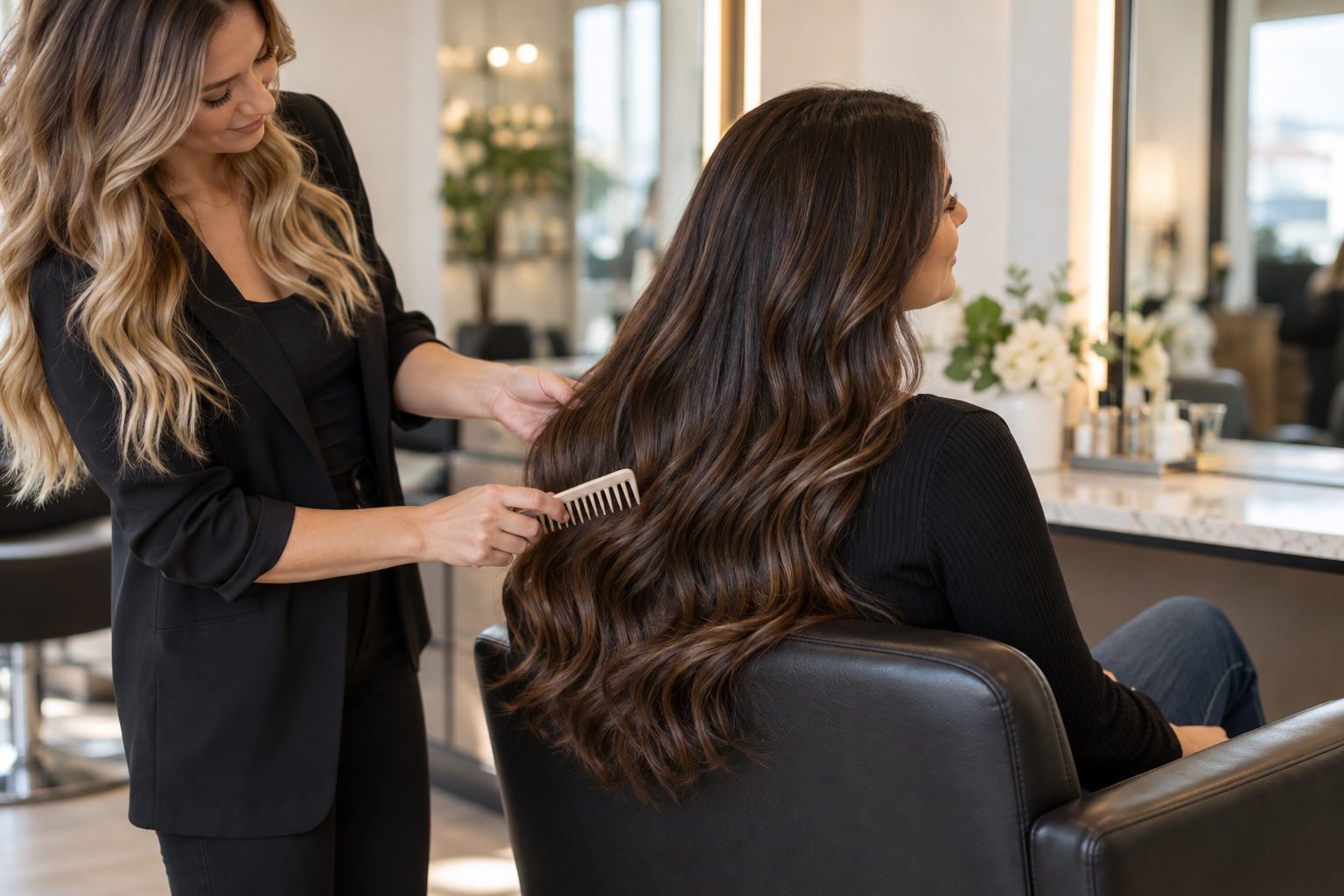
Professionally fitted hair extensions in Arvada, CO can add length, volume, and styling flexibility, but choosing the right application method is just as important as selecting the final color and length.
Hair extensions can create an incredible transformation. They can fill in fine areas, make shorter hair feel more versatile, or provide the long, layered look that would otherwise take years to grow. However, they are not a one-size-fits-all beauty service.
Weft, fusion, I-tip, and tape-in extensions each have different benefits, attachment methods, and maintenance requirements. The best option depends on your natural hair, lifestyle, styling habits, and willingness to attend regular maintenance appointments.
Before committing to an installation, it helps to understand exactly what each method involves.
A proper consultation is more than a quick conversation about length. Your stylist needs to evaluate the condition, density, texture, and current length of your natural hair. They should also ask about previous color, lightening, smoothing services, and any history of scalp sensitivity or breakage.
The consultation is also where you can discuss the look you want. Some clients want a dramatic increase in length, while others mainly need fullness around the sides or ends. A stylist may recommend less extension hair than expected if your goal can be reached with a more targeted installation.
Important consultation topics include:
Hair extensions should enhance your appearance without asking the natural hair to support more weight than it can safely manage.
Weft extensions consist of strands attached along a horizontal track. Depending on the specific system, the weft may be machine-sewn or hand-tied and attached using beads, thread, or another professional technique.
Because the hair is distributed across a row, wefts can be an effective choice for creating noticeable fullness and length. The stylist can customize the number and placement of rows according to the client’s density and desired result.
Wefts may work well for clients who:
Placement matters. Rows that are too heavy or positioned without considering the natural growth pattern may be uncomfortable or difficult to conceal. They should not cause persistent pulling, soreness, or headaches.
Hand-tied extensions are lightweight wefts in which the extension strands are tied by hand along a thin seam. They are commonly attached to a foundation created with beads and stitching.
The narrow construction can make hand-tied wefts flexible and comfortable when installed correctly. They may be layered to create customized volume while maintaining a natural-looking blend.
Hand-tied extensions can be especially appealing to clients who want:
Despite the name, “hand-tied” describes how the weft itself is constructed. It does not mean the extension hair is individually tied to every natural strand.
These wefts should not be cut through the seam unless the manufacturer and stylist confirm that doing so is appropriate. Cutting an unsuitable hand-tied weft may cause shedding or unraveling.
Fusion extensions, sometimes called keratin-bond extensions, are applied in small sections. Each extension strand has a keratin-based tip that is softened and attached to a small amount of natural hair using a professional fusion tool.
Because the bonds are individually placed, fusion extensions can provide excellent movement and allow the stylist to customize distribution around the head. The small attachments may also make many hairstyles possible when the bonds are properly concealed.
Fusion may suit clients who want:
The installation is usually more time-intensive because each bond is applied separately. Removal must also be performed carefully using the appropriate professional product and technique.
Clients should avoid placing excessive conditioner, oils, or heavy styling products directly on the bonds unless instructed otherwise. These products may interfere with attachment longevity.
I-tip extensions are individual strands with a narrow tip. The stylist threads a small section of natural hair and the extension strand through a bead, then clamps the bead to secure the attachment.
This method does not require heat or adhesive during installation. The beads can be opened during maintenance, allowing the extensions to be moved closer to the scalp as the natural hair grows.
I-tips may appeal to clients who want:
The beads need enough natural hair for support and concealment. Clients with extremely fine or fragile hair may need a different method or a lighter installation.
Beads should feel secure but not painful. If an attachment pulls, slips repeatedly, or causes irritation, contact the salon instead of attempting to clamp or remove it at home.
Tape-in extensions are supplied in small, flat wefts with professional adhesive strips. A thin section of natural hair is placed between two extension pieces, creating a lightweight sandwich-style attachment.
Because the tabs lie flat against the head, tape-ins can be discreet and relatively quick to install. They may also work well for clients with finer hair when the weight and placement are selected appropriately.
Tape-in extensions are often chosen by clients who want:
Oil, conditioner, and certain styling products should be kept away from the adhesive tabs. The extensions must be professionally removed and retaped before they are reapplied.
Attempting to pull tape-ins from the hair without the proper removal solution can cause unnecessary breakage.
No single extension method is automatically superior. The right choice is the method that suits your hair and routine while providing the desired result with manageable maintenance.
Consider these comparisons:
Your natural density is especially important. A method that works beautifully on thick hair may be difficult to conceal or too heavy for very fine hair.
Any extension method can place stress on the natural hair if it is too heavy, applied too tightly, neglected, or removed incorrectly. Professional installation and consistent maintenance are essential.
The American Academy of Dermatology warns that repeated tension from tight hairstyles may contribute to traction alopecia. Early signs can include soreness, broken hairs, thinning near attachment areas, or small bumps on the scalp.
The Cleveland Clinic also explains that long-term pulling can damage hair follicles. Extensions should therefore feel secure but comfortable.
Contact your stylist if you experience:
Do not wait until the next scheduled appointment if something feels wrong.
The beauty of extensions depends heavily on what happens at home. Improper brushing, going to sleep with wet hair, and allowing tangles to build around the attachments can shorten the life of the installation.
A typical routine may include:
The American Academy of Dermatology’s damage-prevention guidance recommends gentle handling and limiting excessive heat. Those habits are particularly important when caring for both natural hair and extensions.
A crowded beauty shelf is not necessary, but the right products can make extension maintenance easier. Your stylist may recommend a gentle shampoo, lightweight conditioner, detangling product, heat protectant, and suitable styling formula.
Avoid assuming that every “natural” oil or homemade treatment is safe for extension attachments. Oils can loosen tape and may cause other methods to slip when applied too close to the scalp.
The U.S. Food and Drug Administration provides general information about hair-care products and cosmetic safety. Follow product labels and stop using anything that causes irritation.
Salon Hether’s has served the Arvada community since 1999. Its extension-certified stylists partner with Babe Hair Extensions and offer weft, hand-tied, fusion, I-tip, and tape-in methods.
Every extension service requires a consultation. During that appointment, the stylist evaluates the client’s natural hair and recommends a customized option based on the desired length, volume, lifestyle, and maintenance expectations.
The salon also provides professional installation and removal rather than encouraging clients to manage attachment changes at home.
Great extensions should not simply look long. They should be blended into the haircut, matched to the color, distributed comfortably, and selected for the client’s real routine.
The most successful transformation begins with an honest consultation and continues through correct home care and timely maintenance. When the method, weight, color, and placement are customized properly, extensions can feel less like an accessory and more like a natural part of your personal style.